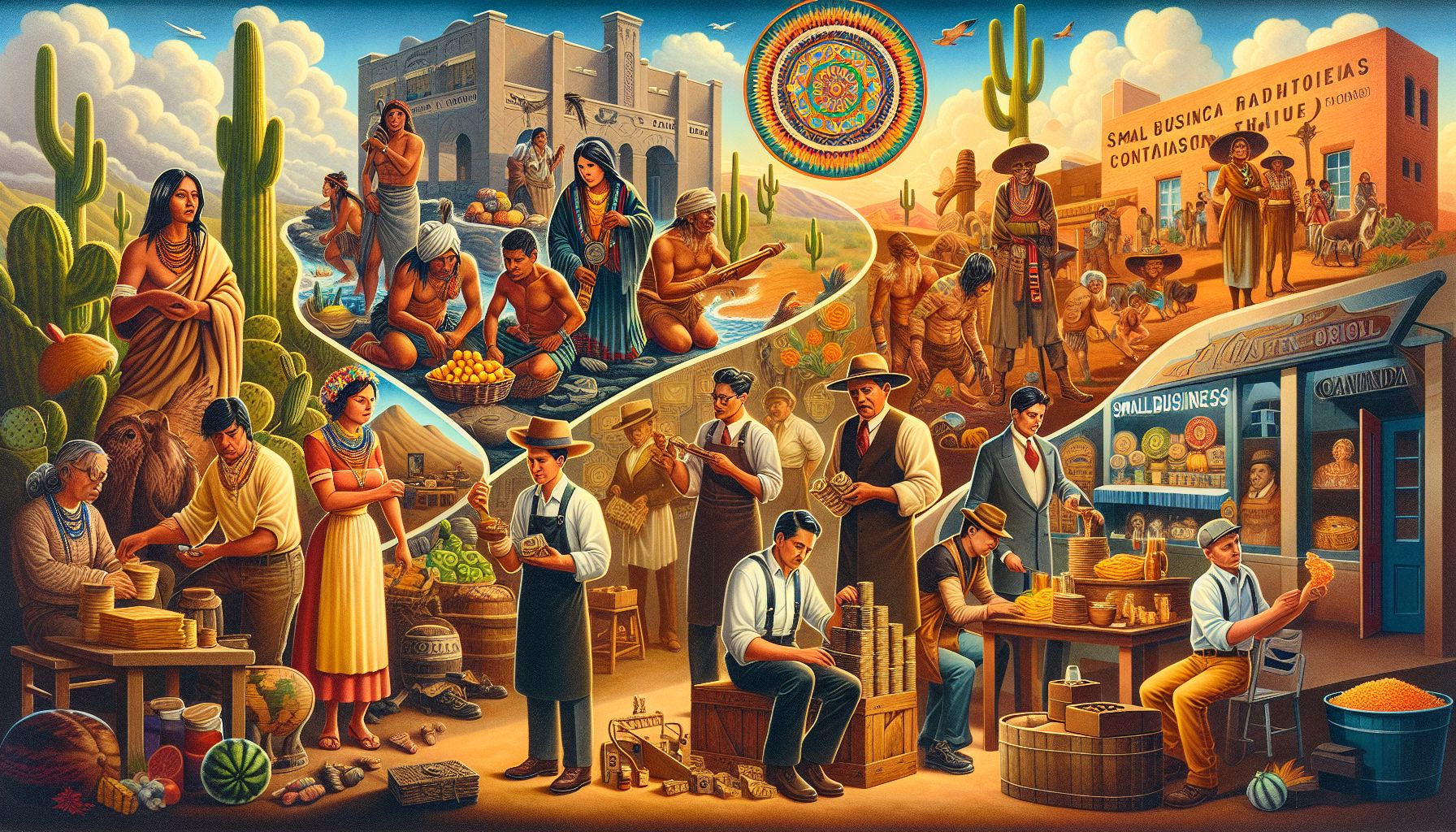
Owing to its rich historical past and persisting legacy of trade and commerce, the state of Arizona has ample lessons to offer small business owners who are aiming for growth and sustainability.
The Early Beginnings – Trade in Arizona
Arizona, brimming with intriguing historical tales and anecdotes, has a past that is deeply embedded in commerce and trade. This tradition started with the Hohokam, early Native American inhabitants who were well established in trade with Mesoamerican cultures around 300 BC. With trade networks that extended from Central America up to the Colorado plateau, the Hohokam recruited an economy based on bartering goods like cotton textiles, obsidian tools, and pottery. This laid the foundation for a series of commercial activities that the region would witness in the subsequent centuries.
The Birth of Modern Commerce – Early 19th Century
Fast forwarding to the early 19th centuries, young Arizona exhibited the true spirit of entrepreneurship. With the burgeoning of mining industry and railroads in cities like Tombstone and Bisbee, local businesses spawned offering lodging, food, and entertainment catering to miners and travelers. This era also marked the advent of big enterprises like the Goldwater department store, which started off small and gradually expanded into one of the iconic business establishments in Arizona.
Urbanization and Economic Growth – Scottsdale in the Mid 20th Century
By the mid 20th century, Arizona had achieved statehood and entered a period of considerable urbanization. One city that best reflects this transformation is Scottsdale. The ‘Old Town Scottsdale’, as it is lovingly called today, was once a humble town that relied on agriculture, ranching, and a single general store for its survival.
With the arrival of Frank Lloyd Wright, a renowned architect in the 1930s, Scottsdale started to grow into a modern city with an influx of businesses. Small scale industries, restaurants, bars, and stores now line the streets of Old Town Scottsdale, making it a melting pot of culture and commerce. This illustrates how the right combination of innovation, resilience, and adaptation can convert a small town into a thriving business hub.
Lessons for Small Business Owner – The Spirit of Arizona
This historical narrative demonstrates that as a small business owner, adapting to changes, taking calculated risks, and leveraging opportunities are primary drivers to achieving sustainable growth. The Hohokam’s established trade routes offer the lesson of unlocking new markets and avenues. The rise of Tombstone and Bisbee exhibits the importance of catering to local needs while the story of Goldwater department store stresses the essence of patience, resilience, and gradual expansion.
The most striking lesson, however, comes from the uplifting journey of Scottsdale. It teaches us that a small business’s environment is not static. As the socio-economic fabric of the society evolves, there are constantly new customers to cater to, novel problems to solve, and fresh markets to penetrate. It highlights the significance of being dynamic, receptive to changes, and creating opportunities out of challenges.
Conclusion: Gleaning Insights from Historical Milestones
Tracing back the history of Arizona, it is unmistakable that the spirit of commerce and entrepreneurship is woven into the state’s fabric. Starting from the Hohokam’s intricate trade network, through the bustling commerce of Tombstone and Bisbee to the modernization of Scottsdale – the thread of resilient entrepreneurship runs consistently.
For small business owners, the history of Arizona proclaims a message of courage, adaptation, and innovation. It indicates that no matter what the circumstances are, with the right attitude and acumen, a small beginning can be transformed into a thriving commercial endeavor. As we remember the past, let us also glance towards the future with great hope, taking valuable lessons from Arizona’s rich heritage.